
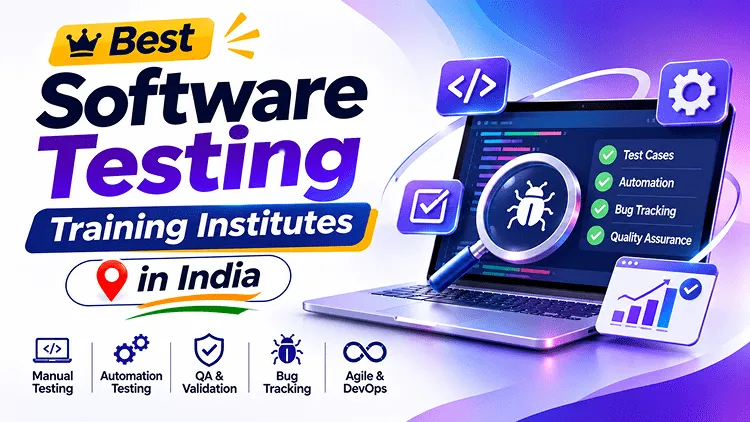


Software testing has become an important part of the software development process. Before an application, website or digital product reaches users, it needs to be checked for functionality, performance, security and reliability. Companies depend on software testers and quality assurance professionals to identify defects, improve product quality and make sure applications work as expected.
As the technology industry continues to grow, software testing offers different learning and career paths. Beginners can start with manual testing and software testing fundamentals, while learners with programming knowledge can explore automation testing, Selenium, API testing, performance testing and modern testing frameworks.
However, choosing the right programme can be confusing. Some courses focus mainly on manual testing, while others provide a more technical approach involving programming languages, automation tools and real-world projects. There are also online specialisations, professional training programmes and academic courses.
The right choice depends on your current knowledge, career objectives, preferred learning format and the depth of practical experience you want to gain.
This guide explores the top 10 Software Testing learning options in India, beginning with SkillDeck offering before comparing other providers.
Understanding What a Good Software Testing Course Should Cover
Before comparing providers, it is important to understand the skills that make up a complete software testing learning path.
A beginner-friendly programme should introduce software testing fundamentals, the Software Development Life Cycle (SDLC), the Software Testing Life Cycle (STLC), test scenarios, test cases and defect management.
After learning the fundamentals, students can move towards more specialised areas:
- Manual Testing: Understanding application behaviour, preparing test cases, executing tests and reporting defects.
- Automation Testing: Using scripts and frameworks to automate repetitive testing activities.
- Selenium: Learning browser automation, WebDriver commands and element locators.
- API Testing: Checking application programming interfaces, responses, requests and data validation.
- Database Testing: Validating stored data and understanding SQL queries.
- Agile Testing: Working with testing activities in Agile and Scrum environments.
- Performance Testing: Understanding response times, load testing and application performance.
- Testing Projects: Applying concepts to practical applications and real-world testing scenarios.
A programme does not necessarily need to cover every advanced topic. What matters is whether its curriculum matches the learner's intended career path.
10 Software Testing Courses in India to Compare
1. SkillDeck

SkillDeck offers a dedicated Software Testing training program designed to help learners develop practical knowledge of manual testing and automation testing.
The programme covers the testing activities involved in checking software functionality, performance and reliability. Its curriculum introduces learners to test planning, test case creation, defect tracking, Selenium automation, API testing and Agile testing practices.
One of the useful aspects of this programme is its focus on practical learning. The published programme page lists more than 40 training hours, 20+ assignments and 5+ capstone projects. Its curriculum is organised into 10 modules with graded projects.
Key learning areas include:
- Manual testing and functional testing
- Software testing fundamentals and STLC
- Selenium WebDriver automation
- Test case design and defect management
- API testing fundamentals
- Agile testing methodologies
- Practical assignments and capstone projects
The programme is positioned for fresh graduates, QA aspirants, software engineers, manual testers, automation testers and career switchers.
Learners can explore the curriculum and compare the programme's learning outcomes before deciding whether it matches their requirements.
Explore the detailed comparison of the best Software Testing Courses in India
2. ExcelR

ExcelR offers a Certificate Programme in Testing Tools through SWAYAM Plus, focusing on Selenium automation using Java and Python, along with API testing.
This programme introduces learners to programming concepts and automation tools used to test software applications. It is a more specialised option for candidates who want to explore automation testing.
The published programme includes 10 hours of theory and 20 hours of practical learning.
Key learning areas include:
- Software testing fundamentals
- Java and Python programming concepts
- Selenium WebDriver
- TestNG and automation frameworks
- API testing
- Object-oriented programming concepts
- Practical testing scenarios
The programme is delivered online, with assessment and certification details provided through the SWAYAM Plus platform.
3. C-DAC

The Centre for Development of Advanced Computing (C-DAC) offers a Certificate Course in Software Testing through its Advanced Computing Training School (ACTS).
This is a structured programme designed to develop knowledge of software quality assurance, testing methodologies and industry-standard tools. Its published programme information describes a 720-hour learning pathway that takes approximately six months, with physical classroom and laboratory sessions.
The curriculum covers operating systems, software engineering concepts, programming, testing fundamentals, automation frameworks and testing tools.
Key learning areas include:
- Software Development Life Cycle and Testing Life Cycle
- Java and Python programming concepts
- Manual and functional testing
- Selenium and automation frameworks
- API and performance testing
- Mobile testing and Appium
- Quality assurance and practical projects
The programme is particularly relevant for graduates who want a structured and intensive learning experience. Eligibility requirements and available training centres should be checked before applying.
4. Internshala Trainings

Internshala trainings offers an online Software Testing course that introduces learners to Java programming and automation testing.
The programme focuses on helping beginners understand software testing concepts and develop basic automation skills. Students learn how to work with Selenium WebDriver, interact with web elements and prepare automated test scripts.
The training also includes assignments, quizzes, module assessments and practical projects.
Key learning areas include:
- Java programming fundamentals
- Introduction to automation testing
- Selenium basics
- Selenium WebDriver commands
- Locators and web elements
- Functional and non-functional testing
- Practical testing projects
Internshala also lists a separate Software Testing Placement Course with AI. Its published details include more than 300 hours of learning, six courses, five projects and six assignments. This is a separate, more extensive option and should not be confused with its shorter Software Testing course.
5. Coursera

Coursera offers the Software Testing and Automation Specialization developed by the University of Minnesota.
This programme focuses on the technical concepts behind software testing and automated test development. It is suitable for learners who want to understand how testing techniques are applied to both front-end and back-end software.
The specialisation consists of four courses and covers test planning, functional testing, automated testing and software verification concepts.
Key learning areas include:
- Software testing fundamentals
- Verification and validation
- Test planning and test suites
- Automated functional testing
- Regression testing
- White-box testing
- Selenium, JUnit and Cucumber
The programme is delivered online with a flexible learning schedule. The University of Minnesota recommends prior experience with an object-oriented programming language, preferably Java.
6. Simplilearn

Simplilearn offers an AI-Powered Automation Test Engineer Program for learners interested in developing automation testing skills.
The programme is designed around modern software testing practices, combining automation concepts with tools and techniques used in quality engineering. It is a longer learning pathway compared with short introductory testing courses.
Its published programme listing describes a six-month duration and a live cohort learning format.
Learners can explore this option if they want to move beyond basic manual testing and develop skills related to automated testing and modern QA workflows.
Key areas to examine include:
- Automation testing fundamentals
- Test automation frameworks
- Software quality engineering
- Automated test execution
- Testing tools and workflows
- AI-assisted testing concepts
Learners should review the latest detailed syllabus and eligibility requirements before enrolling.
7. Besant Technologies

Besant Technologies offers Software Testing Training that covers manual testing and automation testing concepts.
The programme introduces students to the software testing process, from understanding requirements and creating test cases to identifying defects and using automation tools.
Its published curriculum includes SDLC, STLC, testing principles, test case design techniques and bug life cycle concepts. It also covers Selenium automation and related testing tools.
Key learning areas include:
- Manual testing fundamentals
- Functional and non-functional testing
- Test case design techniques
- Bug tracking and defect management
- Selenium WebDriver
- TestNG and Maven
- API testing and database testing
The provider offers software testing learning options through its training website, with delivery arrangements and batch details that learners should confirm directly.
8. Edureka

Edureka offers Software Testing Fundamentals Training for learners who want to understand the basic stages of the software testing process.
The programme introduces the concepts involved in planning, creating and executing software tests. It also explains how defects are identified, documented and managed during application development.
Its published course information includes instructor-led sessions, assessments and a practical project.
Key learning areas include:
- Software Testing Life Cycle
- Test case creation and execution
- Defect and bug reporting
- Test environment setup
- Test data preparation
- Test case design techniques
- Introduction to CI/CD workflows
This programme can be useful for learners who want to establish a foundation before moving into more specialised automation testing courses.
9. SWAYAM

SWAYAM provides access to academic learning programmes from recognised educational institutions. Its Software Testing course by Professor Rajib Mall of IIT Kharagpur is one option for learners interested in understanding testing theory and techniques.
The programme introduces different approaches to test case design and software reliability. It covers black-box and white-box testing, integration testing, system testing and regression testing.
Key learning areas include:
- Software testing fundamentals
- Black-box testing
- White-box testing
- Test case design techniques
- Integration and system testing
- Regression testing
- Software testing tools
The course is particularly relevant to students who prefer an academic approach to software testing. Basic programming knowledge is listed as a prerequisite.
Learners should check the current SWAYAM course cycle, enrolment dates and assessment details before joining.
Quick Comparison of the 10 Software Testing Learning Options
| Provider | Main learning focus | Learning format |
|---|---|---|
| SkillDeck | Manual testing, Selenium, API testing and projects | Blended, programme-specific |
| C-DAC | Software testing, programming and automation | Classroom and lab |
| Internshala | Java, Selenium and automation fundamentals | Online, self-paced |
| Coursera | Testing theory and automation | Online, self-paced |
| Simplilearn | Automation testing and quality engineering | Live cohort |
| Besant Technologies | Manual and automation testing | Online/classroom options |
| Edureka | Software testing fundamentals and test execution | Online |
| SWAYAM | Academic testing concepts and techniques | Online |
| ExcelR via SWAYAM Plus | Selenium, Java, Python and API testing | Online |
Manual Testing vs Automation Testing: What Should You Learn First?
One of the common questions learners ask is whether they should begin with manual testing or automation testing.
Manual testing involves checking an application without relying on automated scripts. Testers interact with the software, follow test cases, identify defects and document the results. It helps learners understand application behaviour and the overall testing process.
Automation testing uses tools and scripts to perform repetitive testing activities. It can help teams execute large test suites more efficiently and support continuous testing during software development.
For most beginners, understanding manual testing fundamentals first provides a useful foundation. Once you understand test scenarios, test cases, defects and testing workflows, you can progress towards automation tools such as Selenium or Playwright.
However, learners who already have programming experience may be able to move into automation testing sooner.
What Should You Check Before Choosing a Software Testing Course?
The course title alone does not tell you whether a programme is suitable. Two courses may both advertise software testing but offer very different levels of technical depth.
Consider these factors before enrolling:
1. Curriculum: Check whether the course covers SDLC, STLC, manual testing, automation testing and the tools relevant to your career goals.
2. Practical projects: Look for assignments that involve creating test cases, reporting defects, testing applications and writing automation scripts.
3. Programming requirements: Some automation programmes require Java, Python or JavaScript knowledge. Check the prerequisites before joining.
4. Learning format: Decide whether you prefer classroom training, live online sessions or self-paced learning.
5. Trainer support: Check whether instructors provide doubt-solving sessions, project feedback and guidance during practical exercises.
6. Certification: Understand which organisation issues the certificate and what assessments are required to earn it.
7. Career support: If placement or interview assistance is advertised, ask what support is included and whether any conditions apply.
8. Current programme details: Verify fees, duration, upcoming batches and access periods directly with the provider.
Career Opportunities After Learning Software Testing
Software testing can lead to different career paths depending on the technical skills and practical experience developed during training.
Some common job roles include:
- Software Testing Trainee: Performs basic testing activities and learns how to execute test cases.
- Manual Tester: Checks application functionality and reports defects.
- QA Analyst: Reviews software quality and helps ensure that applications meet requirements.
- Automation Tester: Develops and maintains automated test scripts.
- Selenium Tester: Uses Selenium WebDriver to automate browser-based testing.
- API Tester: Validates APIs, requests, responses and application integrations.
- Performance Tester: Evaluates how applications perform under different workloads.
- QA Engineer: Works across testing processes, quality assurance and software delivery.
The right course should help you build the skills required for the particular role you want to pursue.
Conclusion
Choosing among the best software testing courses in India requires more than comparing course names or advertised benefits. Learners should understand the curriculum, practical exposure, tools, learning format and level of technical knowledge required.
SkillDeck offers a dedicated Software Testing Training Program covering manual testing, Selenium, API testing and practical projects. NevoLearn is worth checking for future or newly listed offerings, although a dedicated software testing programme could not be verified in its currently accessible listing.
Other options such as C-DAC, Internshala, Coursera, Simplilearn, Besant Technologies, Edureka, SWAYAM and ExcelR provide different approaches to learning software testing.
Before making a decision, compare each programme with your current skills and career objectives. A course that gives you the opportunity to practise testing concepts, work with relevant tools and understand real testing workflows can provide a stronger foundation for a career in software quality assurance.